
Introduction
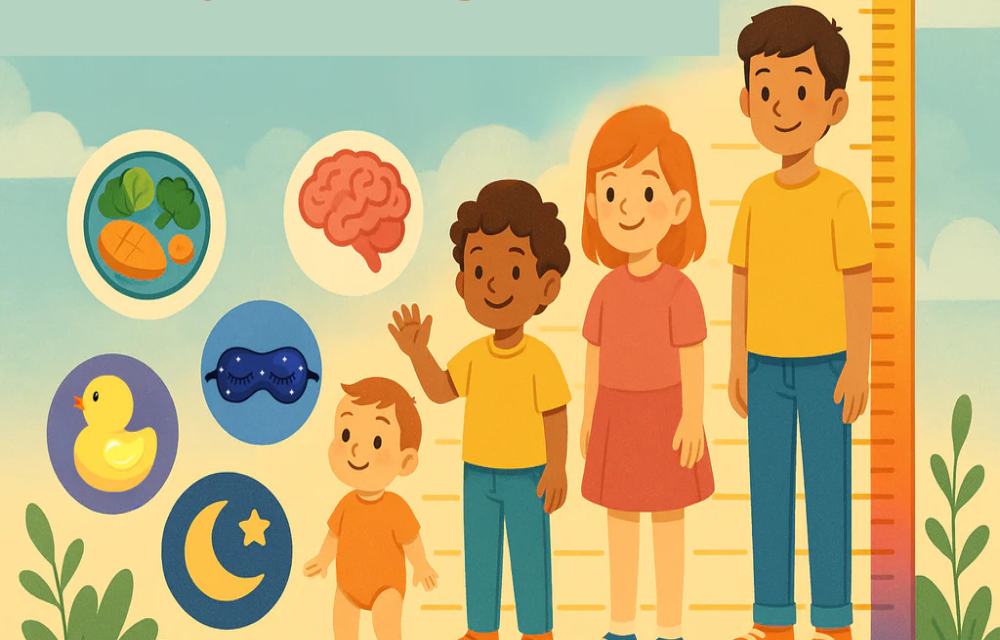
The early years of a child’s life are a period of remarkable growth and transformation, laying the foundation for their future physical, cognitive, emotional, and social development. Early childhood growth encompasses several distinct stages, each marked by unique developmental milestones and challenges. Understanding these stages is essential for parents, educators, and caregivers to provide the appropriate environment, support, and stimulation that foster optimal development. These stages align with rapid brain development and increasing interaction with the environment, shaping how children learn, communicate, and adapt to the world around them. By recognizing and nurturing each stage, early childhood programs can ensure children develop essential skills and habits that influence their lifelong health, learning, and well-being.
Prenatal Stage
Though often considered before birth, the prenatal stage is critical as it lays the groundwork for all future development. This stage is divided into the germinal, embryonic, and fetal periods. During this, a single fertilized cell evolves into a complex organism, with vital organs and bodily systems forming rapidly. Brain development begins early and continues to grow exponentially, influenced by genetics as well as environmental factors such as maternal nutrition and exposure to harmful substances. The health and environment during the prenatal stage impact a child’s potential and vulnerability. Stressors and adequate care in this stage can set the stage for optimal or compromised developmental trajectories after birth, making prenatal care an integral part of early childhood growth.
Infancy (Birth to 2 Years)
Infancy is a stage characterized by dramatic physical growth and foundational cognitive and sensory development. Infants rapidly develop motor skills, beginning with reflexes and progressing to intentional movements such as reaching, grasping, crawling, and eventually walking. Brain growth is swift, with neural pathways forming through sensory experiences and interactions. Language development starts with cooing, babbling, and progresses to simple words. Attachment to primary caregivers is vital during this period, as secure emotional bonds build trust and emotional regulation. Infants also begin to recognize objects and people, develop memory, and show early problem-solving behaviors. This stage demands responsive caregiving and a safe environment to support sensory exploration and emotional security.
Toddlerhood (2 to 4 Years)
Toddlerhood represents a shift toward independence and active exploration. Children’s physical abilities mature, allowing running, jumping, and fine motor skills like drawing and manipulating objects to develop rapidly. Language skills expand exponentially, with toddlers beginning to form full sentences and engage in simple conversations. Cognitive development during this stage includes categorizing, symbolic thinking, and basic problem-solving. Toddlers express emerging self-awareness and emotions, often testing boundaries to understand social rules. Play becomes more complex and imaginative, helping toddlers learn social interaction and cooperation. This phase is marked by rapid emotional fluctuations and cognitive curiosity, requiring nurturing guidance to foster autonomy balanced with safety.
Preschool Years (4 to 6 Years)
The preschool stage is notable for refinement in cognitive, social, and emotional domains. Children’s thinking becomes more symbolic and logical, though still concrete rather than abstract. Language skills are sophisticated enough to tell stories, ask complex questions, and express a range of feelings. Social interactions evolve as children learn to share, collaborate, resolve conflicts, and develop friendships. Emotional regulation improves, with increased ability to delay gratification and understand others’ perspectives. Physical skills like coordination and balance improve through active play and structured activities. Preschoolers develop early literacy and numeracy concepts in preparation for formal schooling, making this a critical period for guided learning that balances structure with creativity and play.
Early School Age (6 to 8 Years)
As children transition into early school age, their cognitive abilities expand to include logical thinking, problem-solving, and understanding abstract concepts. Academic skills such as reading, writing, and arithmetic become focal points of development alongside creativity and physical skills. Socially, children navigate complex peer relationships, group dynamics, and start to internalize societal norms. Emotional regulation becomes more consistent, and self-awareness grows. During this stage, children develop a stronger sense of identity and self-esteem based on accomplishments and social acceptance. Physical development slows compared to infancy but continues steadily with increasing stamina and refined motor skills. This stage solidifies the foundation for lifelong learning and interpersonal skills.
Physical Development Across Stages
Physical growth is continuous but varies in pace across early childhood stages. Infants experience rapid changes in height and weight, complemented by improving fine and gross motor skills. Toddlers gain mobility and dexterity, enabling more complex interaction with their environment. Preschool children develop better balance, coordination, and strength, supporting more sophisticated physical activities. Early school-age children refine motor skills necessary for sports and other physical tasks. Nutrition, health care, and physical activity in each stage profoundly influence physical growth and motor competence, which are critical for overall health and active participation in social and academic life.
Cognitive and Language Milestones
Cognition evolves from basic sensory-motor skills in infancy to symbolic and logical thinking in later early childhood stages. Language acquisition progresses from simple sounds and words to complex sentences and nuanced communication. Early learning experiences, responsive interactions, and rich language environments accelerate these milestones. Cognitive and language development are deeply intertwined; vocabulary growth enhances thought processes and vice versa. By preschool, children grasp concepts of time, sequence, and cause-effect relations. Early school age marks the transition to literacy and numeracy, reinforcing the need for a supportive academic and home learning environment to nurture cognitive and language competencies.
Social and Emotional Growth
Social and emotional development unfolds progressively as children move from attachment and trust-building in infancy to complex social skills and self-regulation by early school age. The capacity to interact with peers, resolve conflicts, and empathize with others increases with age and experience. Emotional awareness deepens, allowing children to manage a variety of feelings effectively. The development of self-identity and autonomy supports confidence and resilience. Early childhood programs that emphasize socio-emotional learning equip children with the necessary tools to form healthy relationships and navigate challenges, setting the groundwork for positive mental health and social well-being.
Conclusion
Understanding the major stages of early childhood growth illuminates the remarkable journey of development that occurs from conception through the early school years. Each stage—prenatal, infancy, toddlerhood, preschool, and early school age—is marked by distinctive physical, cognitive, emotional, and social milestones that build upon one another. Recognizing these stages allows caregivers and educators to provide tailored support that nurtures a child’s potential at every step. Early childhood growth is a time of profound transformation that shapes not only immediate abilities but also lifelong health, learning readiness, and social competence. Investing in each stage with deliberate care and optimal environments ensures children develop the foundation necessary for fulfilling lives and active, responsible citizenship.
Hashtags
#EarlyChildhoodGrowth #ChildDevelopmentStages #Infancy #Toddlerhood #PreschoolYears #EarlySchoolAge #PhysicalDevelopment #CognitiveDevelopment #LanguageMilestones #SocialEmotionalGrowth #DevelopmentalMilestones #BrainDevelopment #ChildhoodLearning #MotorSkills #Attachment #EarlyEducation #ChildPsychology #GrowthAndDevelopment #ParentingTips #LifelongLearning #ChildhoodWellbeing #PlayAndLearn #SchoolReadiness #ChildHealth #HolisticDevelopment #EarlyYears