
Introduction
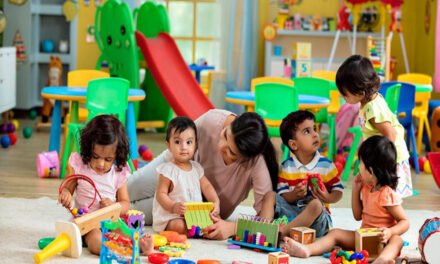
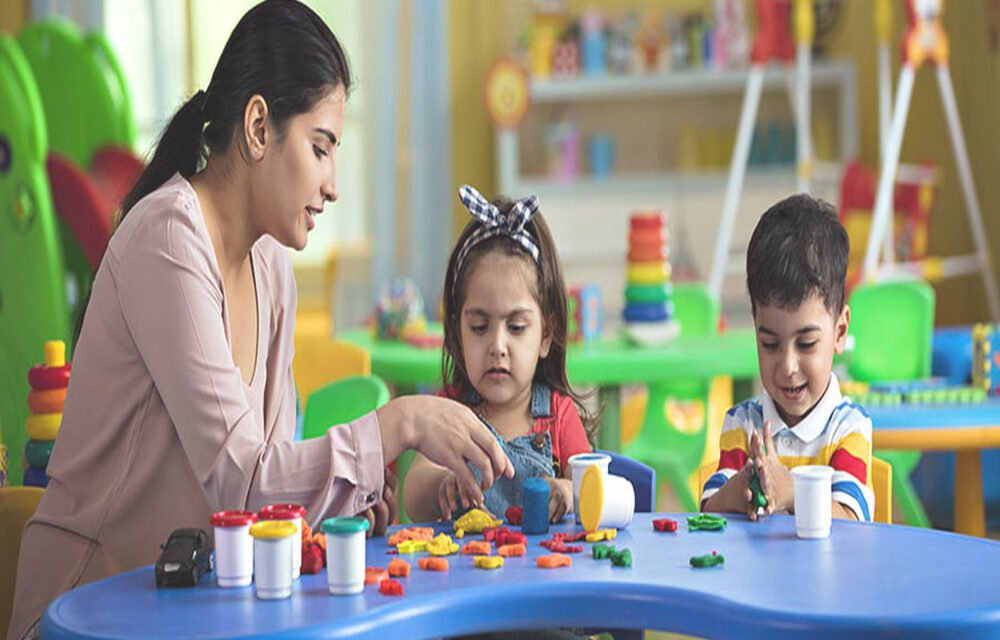
Play-based learning is a pedagogical approach that centers on the natural way children learn—through play. It integrates play into educational activities to make learning meaningful, engaging, and developmentally appropriate. Rather than viewing play as mere recreation, this approach recognizes play as a vital and purposeful mode of exploration where children construct knowledge, develop social skills, and build cognitive abilities in a holistic manner. The educational value of play-based learning has been widely supported by developmental theories and research, demonstrating its positive impacts on cognitive, emotional, social, and physical domains. In early childhood education, play is not an optional extra but a fundamental vehicle for experiential learning and lifelong skill development.
Play as the Natural Medium of Learning
Play is the natural language through which young children make sense of their world. It allows children to explore, experiment, and express ideas freely without fear of failure or judgment. Through play, children are active participants, constructing their own understanding rather than passively receiving information. This active engagement increases motivation and curiosity, as children initiate learning experiences based on their interests and developmental readiness. Play-based learning respects the child’s autonomy and learning style, fostering intrinsic motivation and a positive attitude toward education. By leveraging the power of play, educators create meaningful and purposeful experiences that resonate deeply with children’s natural ways of thinking and interacting.
Development of Cognitive and Critical Thinking Skills
Play-based learning significantly enhances cognitive development by promoting problem-solving, reasoning, and creativity. When children engage in building blocks, puzzles, pretend play, or role-playing scenarios, they develop the ability to think critically and explore cause-and-effect relationships. For example, constructing a tower teaches spatial reasoning and balance, while playing “store” involves counting, communication, and negotiation skills. These activities also foster abstract thinking as children use symbols and imagination to represent reality, a stage described famously in Piaget’s preoperational development phase. This cognitive stimulation supports later academic skills such as literacy and numeracy by embedding concepts within meaningful and enjoyable contexts. Hence, play nurtures the brain’s executive functions, including attention, memory, and flexible thinking.
Social-Emotional Growth Through Play
Play-based learning contributes substantially to the social and emotional development of children. Collaborative play encourages skills such as sharing, cooperation, turn-taking, and empathy. When children negotiate roles or resolve conflicts during play, they learn essential social problem-solving strategies and emotional regulation. Play also provides a safe space for children to express and understand emotions, helping them build self-awareness and resilience. Imaginative play enables children to experiment with different perspectives and social roles, fostering empathy and moral reasoning. Such social-emotional competencies are fundamental for healthy peer relationships and emotional well-being, which in turn impact academic engagement and success. A play-rich environment thus supports the development of confident, compassionate, and socially adept individuals.
Language and Communication Development
Play-based learning dramatically enhances language acquisition and communication skills. During play, children naturally engage in rich conversational exchanges, storytelling, and role-playing that build vocabulary and syntax. For instance, in pretend doctor’s office play, children practice asking questions, giving instructions, and sharing information relevant to their roles. Educators facilitate language development by introducing new words, asking open-ended questions, and encouraging dialogue during play activities. This organic language practice strengthens listening skills, expressive abilities, narrative competence, and pragmatic use of language. Importantly, language acquired through play connects meaningfully to the child’s experience, fostering deeper understanding and recall. Thus, play-based learning environments become vibrant linguistic communities supporting fluency and communication competence essential for literacy and social interaction.
Physical Development and Motor Skills
Incorporating physical activity within play-based learning promotes both fine and gross motor development. Active play involving running, jumping, climbing, and balancing supports coordination, strength, and spatial awareness. These gross motor skills enhance brain development by stimulating neural pathways and improving overall health and stamina. Activities such as manipulating blocks, drawing, or using scissors develop fine motor control necessary for writing and self-care tasks. Play-based learning often integrates sensory exploration which sharpens tactile perception and motor planning. Such integrated physical and cognitive engagement through play ensures a well-rounded foundation for academic learning and daily functioning. Encouraging active movement during play also fosters positive attitudes towards physical health and well-being from an early age.
Creativity and Imagination Stimulation
Play provides a fertile ground for creativity and imaginative thought, essential attributes for innovation and problem-solving. When children engage in pretend play or use open-ended materials, their minds generate original ideas, experiment with possibilities, and make unique connections. Creativity nurtured through play builds flexibility of thought and divergent thinking—skills critical in navigating an increasingly complex world. Play-based learning encourages children to express themselves artistically, narratively, and physically, developing confidence in creative expression. This freedom fosters curiosity and inventiveness, improving cognitive agility. Imaginative play supports later academic and life skills by enabling children to think abstractly, visualize concepts, and generate solutions beyond conventional boundaries.
Encouraging Autonomy and Lifelong Learning
Play-based learning fosters autonomy by empowering children to make choices, follow their interests, and direct their learning paths. This learner-centered approach builds self-confidence and decision-making skills, allowing children to take ownership of their development. In play, mistakes are not failures but opportunities for growth, developing a growth mindset essential for lifelong learning. Children learn perseverance, patience, and self-regulation as they navigate challenges independently or cooperatively. Play cultivates intrinsic motivation, making learning joyful and self-sustaining. By instilling habits of curiosity and exploration, play-based learning establishes a foundation for lifelong intellectual engagement, adaptability, and continuous self-improvement.
Building Foundational Skills for Formal Education
Play-based learning effectively prepares children for formal education by integrating foundational academic skills in meaningful contexts. Numeracy, literacy, science, and social studies concepts emerge organically in play activities that involve sorting, counting, narrative construction, and exploring cause and effect. This contextual learning aids retention and deeper understanding compared to rote memorization. Play also enhances attention span, executive function, and social competence necessary for school readiness. Children accustomed to play-based learning carry positive attitudes about learning and exhibit higher engagement levels when transitioning to structured classroom environments. Early exposure to challenging and enjoyable play scenarios equips children with practical and emotional skills necessary for academic success and wellbeing.
Conclusion
Play-based learning is a pedagogical cornerstone in early childhood education, harnessing the innate curiosity and creativity of children to promote holistic development. It transforms learning into a dynamic, meaningful, and joyful process where children build cognitive, social, emotional, linguistic, and physical capacities through active engagement. Play nurtures critical thinking, problem-solving, empathy, communication, and physical skills in integrated ways that prepare children for academic and life success. By valuing exploration, imagination, and autonomy, play-based learning fosters independence and motivation that extend beyond the classroom into lifelong learning. Consequently, educators and caregivers who implement play-based methodologies provide children with the best chances of thriving as confident, capable, and well-rounded individuals in the modern world.
Hashtags
#PlayBasedLearning #EarlyChildhoodEducation #ChildDevelopment #CognitiveGrowth #SocialSkills #EmotionalDevelopment #LanguageAcquisition #PhysicalDevelopment #CreativeLearning #LifelongLearning #ChildCenteredLearning #IntrinsicMotivation #ProblemSolving #CriticalThinking #Imagination #EducationalPedagogy #HolisticEducation #SchoolReadiness #ActiveLearning #Exploration #SelfDirectedLearning #LearningThroughPlay #ChildEngagement #InclusiveEducation #PlayAndLearn #EarlyLearning