

Emerging Integration in Early Childhood Education
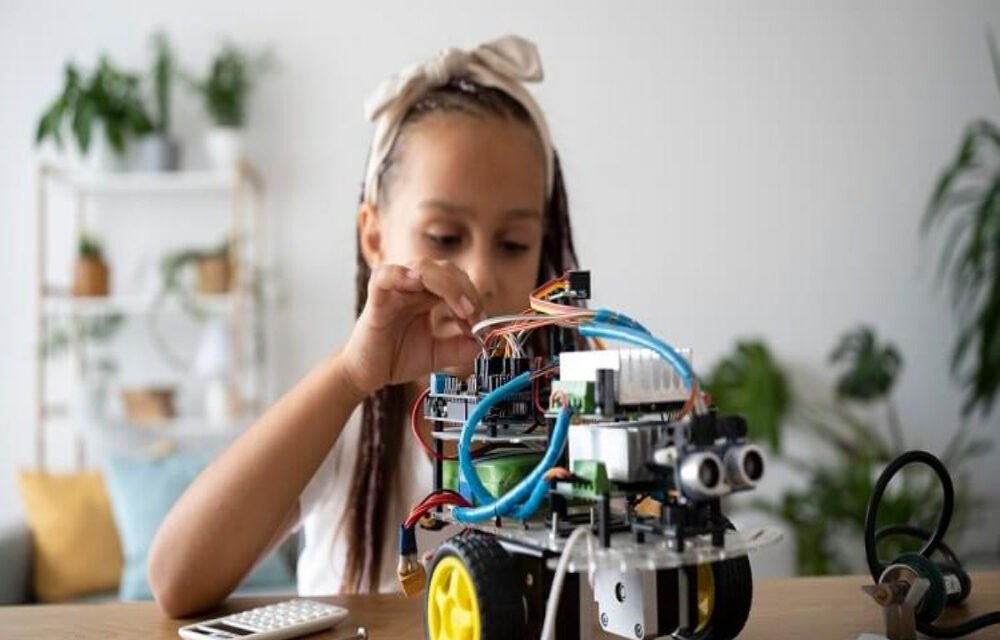
- Robotics education is rapidly expanding in preschools with interactive AI-powered and programmable robots tailored for young learners.
- These tools introduce foundational STEM concepts through play, enhancing cognitive development and problem-solving skills.
- Market growth is driven by increasing digitization, parental demand, and government STEM initiatives worldwide.
- Products focus on tactile, sensory, and adaptive interactions appropriate for ages 0 to 7.
- Early exposure prepares children for future technology use and digital literacy from a young age.
Benefits for Cognitive and Social Development
- Robotics education fosters creativity, critical thinking, and technical skills in preschoolers through hands-on building and coding.
- Robots serve as engaging companions promoting collaboration, communication, and confidence in social settings.
- Early robotics can support language acquisition and social-emotional learning, especially for diverse and special needs learners.
- These programs provide personalized learning experiences adapting to children’s developmental milestones.
- Integration of AI and IoT enhances adaptive learning tailored to individual progress.
Challenges to Widespread Adoption
- High costs of advanced robotics and maintenance limit accessibility in many schools and households globally.
- Concerns about screen time, data privacy, and overreliance on technology require careful management and regulation.
- A shortage of adequately trained educators in robotics pedagogy slows classroom integration.
- Safety and durability standards for child-friendly robots necessitate ongoing innovation.
- Equity challenges exist, with developing regions lagging behind due to infrastructure and funding gaps.
Global Market and Regional Variations
- The U.S. and China lead market growth with substantial government investments and pilot programs.
- European countries show steady adoption balanced with traditional educational values.
- Emerging markets like India and Brazil are exploring robotics integration with growing interest.
- Regional curricula differences affect adoption pace and focus areas in robotics education.
- Collaborative international initiatives push for standardized frameworks and resource sharing.
Future Prospects and Policy Implications
- Robotics education is set to become a standard in early childhood curricula as costs decrease and awareness grows.
- Investments in educator training, infrastructure, and curriculum development are crucial to maximize benefits.
- Policies promoting digital literacy and STEM skills align with robotics adoption in preschools.
- Ongoing research will refine pedagogical approaches and technological designs suited for young learners.
The blend of physical and digital learning through robotics promises to redefine early education globally.