

Critical Period for Language Acquisition
- The most intense period for language acquisition occurs in the first few years of life, especially from birth to around 7 years.
- Neuroplasticity is highest during these early years, making language learning more natural and effective.
- After puberty, the brain’s ability to acquire language with native-like proficiency declines significantly.
- Children who start learning a language before age 10 achieve better grammar proficiency compared to those who start later.
- The critical period hypothesis highlights that early exposure to language is crucial for native-like fluency.
Rapid Vocabulary and Grammar Development
- Between ages 2 and 5, children experience rapid vocabulary growth and begin forming complex sentences.
- This period includes stages such as babbling, holophrastic (single word), two-word, telegraphic, and multi-word stages.
- Toddlers acquire new words daily and begin understanding syntax and semantics intuitively.
- Social interactions and responsive adult communication greatly enhance language acquisition during this stage.
- Language acquisition accelerates as children engage more actively in conversations and play.
Bilingual and Multilingual Advantage
- Children exposed to multiple languages early in life can become fluent bilinguals or multilinguals with native-like accent and grammar.
- Early bilingualism fosters cognitive flexibility, creativity, and executive control skills.
- The brain can switch between languages more effortlessly if exposed before age 6-7.
- Delaying second language exposure reduces the likelihood of achieving native-like proficiency.
- Early multilingual exposure does not confuse children but enhances overall language competence.
Environmental and Social Influences
- Rich language environments with frequent, meaningful interactions promote faster language acquisition.
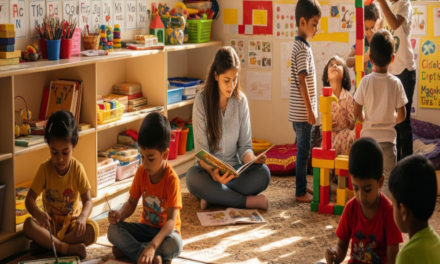
- Reading, storytelling, singing, and conversation are important activities that support language development.
- Social and emotional support in language learning contexts encourages confidence and communication willingness.
- Children’s motivation and curiosity are boosted in nurturing language-rich settings.
- Access to quality early childhood education programs enhances language acquisition.
Continued Language Development Beyond Early Childhood
- Although acquisition peaks early, language learning continues through adolescence into adulthood.
- Vocabulary and complex syntax develop further with education and social exposure.
- Adolescents learning languages later may not reach native speaker competence but can achieve functional proficiency.
- Brain plasticity decreases but does not disappear after the critical period.
- Lifelong language learning is possible, but early childhood remains the optimal window for foundational mastery.